How Security Certifications (SOC 2, ISO 27001) Unlock New Markets and Revenue
Why certifications change sales conversations
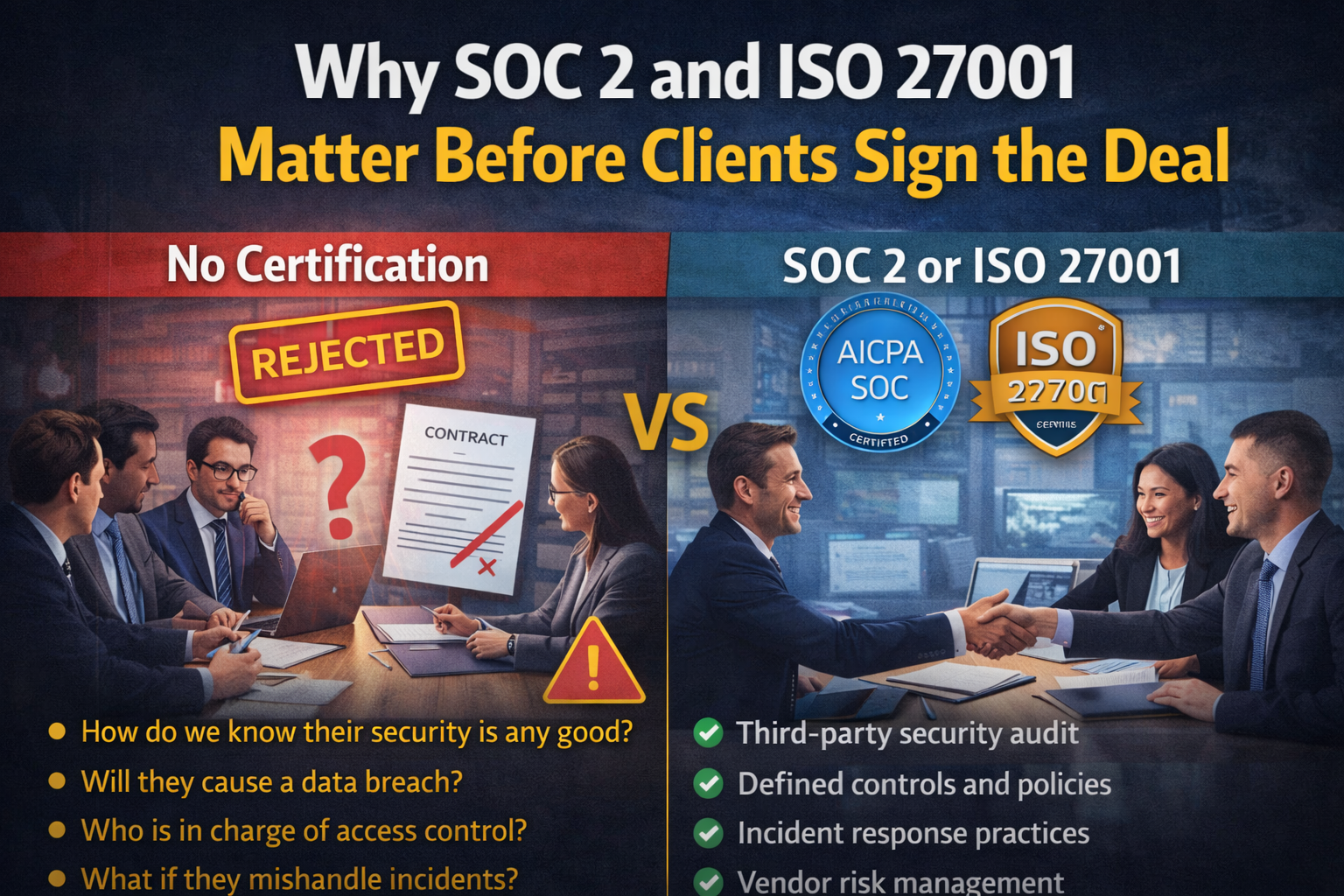
The first security questionnaire changes the tone fast. A buyer who was relaxed during product demos suddenly wants details on access reviews, incident response, vendor risk, and change management. That is where certifications start to matter.
SOC 2 and ISO 27001 do not make a product secure on their own. What they do is turn a vague trust conversation into something buyers can evaluate faster. Instead of asking, “Can we trust you?”, the discussion becomes, “Show us the control set, the audit scope, and the evidence.”
That matters because most B2B deals do not stall on features. They stall on risk review. If your company cannot answer security questions cleanly, the buyer assumes the security work does not exist. A certification does not close the deal by itself, but it removes one easy reason to say no.
SOC 2 vs ISO 27001 in practice
These certifications overlap, but they solve slightly different problems.
SOC 2 is usually easier to map to how US SaaS buyers think. It is based on trust services criteria like security, availability, confidentiality, processing integrity, and privacy. Buyers often ask for the report because it gives them a structured view of controls and testing results.
ISO 27001 is broader and more management-system oriented. It focuses on building and running an information security management system, not just proving a set of controls for auditors. It tends to carry weight with global buyers, especially outside the US.
What buyers actually ask for
In real sales cycles, buyers rarely ask, “Are you SOC 2 certified?” and stop there. They ask for:
- the certificate or report
- scope: which systems, teams, and locations are included
- whether the audit is Type I or Type II
- exception details and remediation status
- subprocessor and vendor controls
- whether encryption, logging, and access reviews are enforced
The useful part is that certification creates a shared vocabulary. Without it, every buyer invents their own checklist.
Where each certification helps most
| Certification | Best fit | Common buyer signal |
|---|---|---|
| SOC 2 | US SaaS, procurement-heavy deals, software vendors | “Send the report and controls matrix” |
| ISO 27001 | International sales, regulated industries, enterprise procurement | “Show the ISMS and certification scope” |
If I had to reduce it further: SOC 2 often helps you get through US enterprise security review; ISO 27001 often helps you show operational maturity across markets.
The revenue impact beyond trust
The return is not just “more trust.” It is fewer blocked deals and less wasted founder time.
Shorter procurement cycles
A security team can burn weeks asking for evidence, re-asking the same questions, and waiting on legal. Certification does not eliminate review, but it cuts down the back-and-forth. The buyer can map your controls to their checklist faster.
That has direct revenue impact. A shorter procurement cycle means less deal slippage and fewer forecast surprises. For a small team, shaving even one month off a late-stage review can matter more than a minor conversion gain at the top of funnel.
Access to enterprise and regulated buyers
Some accounts are effectively off-limits without a baseline security posture. I have seen procurement teams treat certification as a gate, not a nice-to-have. That is especially common in healthcare, fintech, and enterprise IT.
The defense here is straightforward: if your sales motion depends on larger buyers, you need proof that your controls are not handwritten promises. Certification gives the buyer a reason to move you from “risky vendor” to “reviewable vendor.”
What preparation really costs
The certificate is not the expensive part. The operating discipline is.
Policies, controls, and evidence collection
To pass an audit, you need more than a policy folder. You need evidence that the policy exists in practice. That usually means:
- access control reviews
- employee onboarding and offboarding records
- asset inventory
- incident response process
- vendor management
- change management
- backup and recovery tests
- logging and monitoring evidence
The work is partly technical and partly administrative. A lot of teams miss the evidence problem. They know the control exists, but they have not been collecting proof on a monthly cadence.
Common gaps that delay certification
The usual delays are boring, which is exactly why they show up so often:
- shared admin accounts
- missing MFA on critical systems
- no formal risk register
- inconsistent offboarding
- unclear asset ownership
- incomplete vendor lists
- security policies that exist but are not reviewed
- no repeatable evidence collection process
Start collecting evidence before the audit starts. If your team waits until the last minute, you will discover that nobody knows where the logs, approvals, and review records live.
How to turn certification into a market advantage
A certificate sitting in a folder does not help revenue. You have to operationalize it.
Use it in sales collateral, but keep the claims specific. Say what was certified, for what scope, and when. If a control is not in scope, do not imply that it is. Buyers notice when companies oversell compliance.
You should also prepare a lightweight security packet:
- one-page overview of your control program
- certificate or report summary
- scope statement
- data handling summary
- incident response contact path
- list of common questionnaire answers
That packet saves sales engineering time and keeps answers consistent. It also prevents a classic problem: one rep says “yes” to a control that the implementation team cannot actually support.
The best use of certification is not marketing fluff. It is reducing friction in deals that would otherwise die in review.
Conclusion
SOC 2 and ISO 27001 do not create trust out of nowhere. They make trust legible to buyers who already need a reason to proceed.
If you sell into enterprise or regulated markets, certification is often a revenue tool as much as a security tool. It can shorten procurement, open larger accounts, and keep your team from spending half its week answering the same questionnaire in different forms.
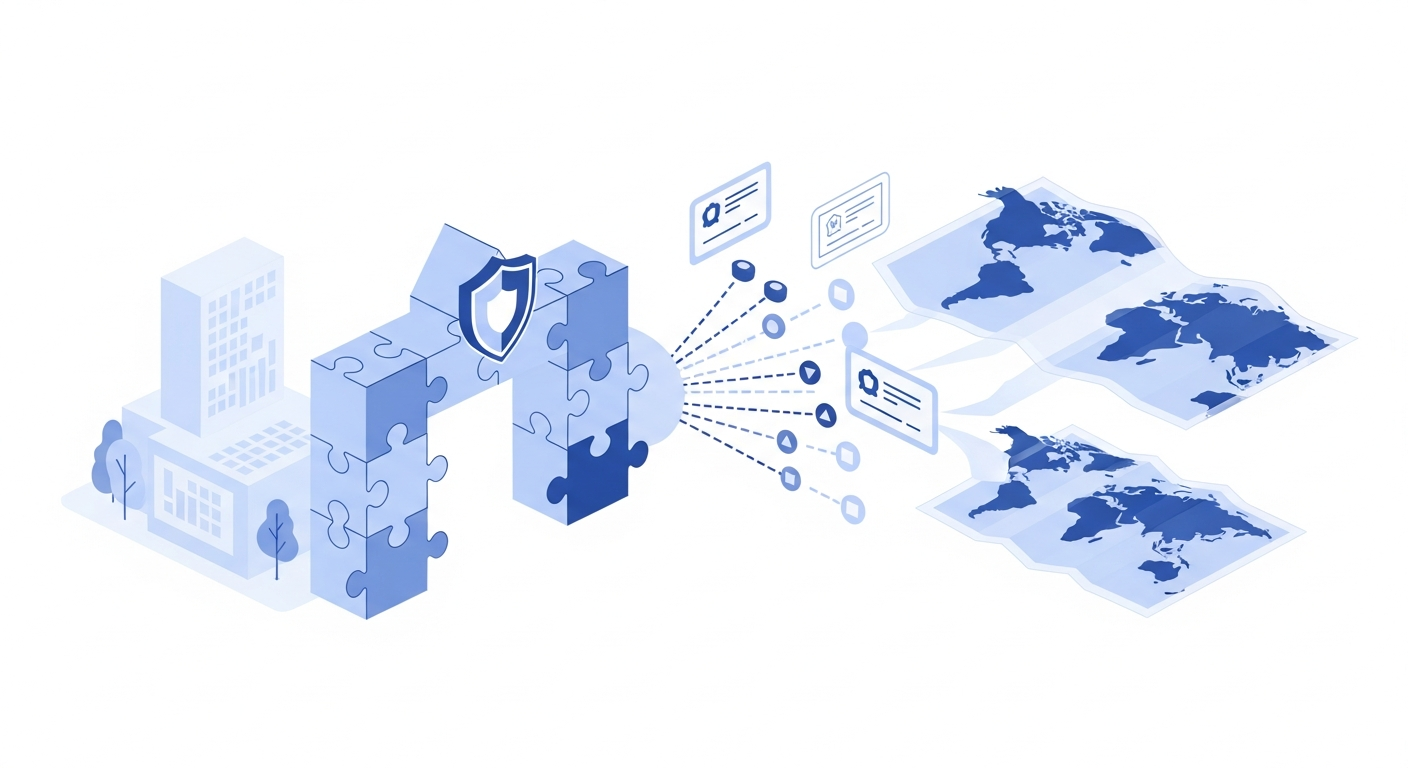
The real value shows up when the audit work becomes a repeatable sales asset. That is when compliance stops being overhead and starts acting like a market entry pass.