What the Red Hat @redhat-cloud-services Incident Means for Your npm Supply Chain
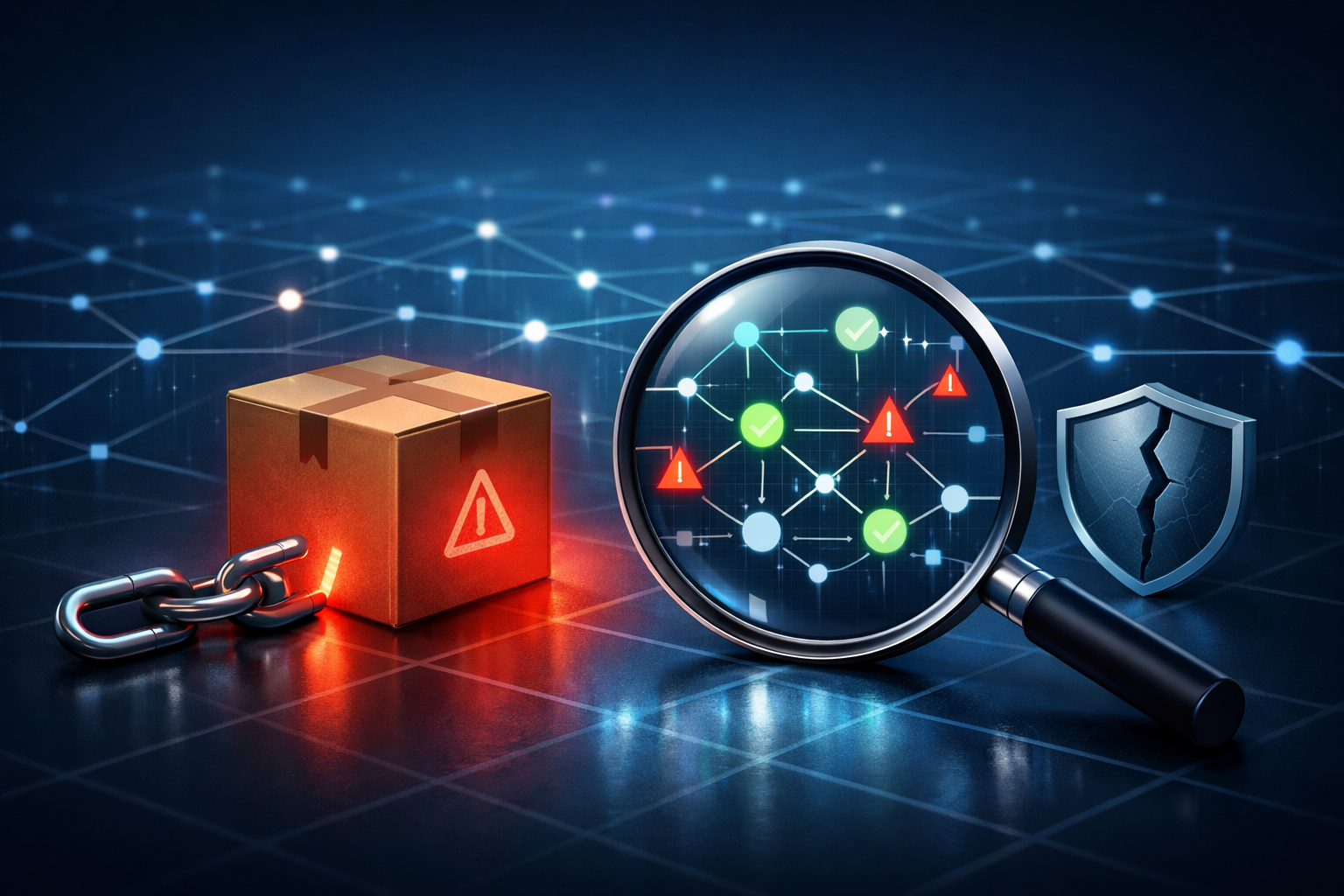
On June 2, 2026, reporting said Red Hat confirmed a supply-chain compromise affecting @redhat-cloud-services npm packages. That kind of headline is easy to ignore if you do not use Red Hat packages directly. I would not.
A scoped package is still executable code. If it lands in a lockfile, a CI runner, a starter template, or a published bundle, it can travel well beyond the team that meant to install it. The right response is not panic. It is to trace where the package entered your build graph, prove whether it ran, and clean up every place where the pipeline trusted it too much.
What Red Hat confirmed about the @redhat-cloud-services compromise
What the reporting says, what is confirmed, and what remains unverified
The public reporting available at the time of writing is limited: Red Hat confirmed a supply-chain compromise involving @redhat-cloud-services npm packages. That part is confirmed.
What is still unclear matters just as much:
- which package names were affected
- which published versions were involved
- what malicious behavior, if any, was present
- whether the issue was limited to publication, install-time execution, or both
- whether customer environments, build secrets, or downstream artifacts were touched
That uncertainty changes the response. Cleanup looks different depending on whether the package was only present in a lockfile, installed in a local tree, executed in CI, or baked into a shipped artifact.
Treat the vendor confirmation as a real incident, but do not invent the missing details. In supply-chain work, “installed” and “executed” are different problems with different cleanup paths.
Why a scoped npm package can still affect large enterprise builds
It is tempting to think, “That is a Red Hat package, and we do not ship Red Hat code.” That is usually the wrong conclusion.
Scoped packages show up in enterprise environments through paths that are easy to miss:
- shared UI kits and design-system wrappers
- internal starter templates copied across many repos
- build tooling used by multiple teams
- transitive dependencies pulled in by higher-level packages
- cached dependencies in CI images and developer workstations
A package name does not define trust. It only defines a namespace. If your build accepts it, resolves it, caches it, and executes its lifecycle hooks, then it is part of your supply chain.
How this kind of npm compromise spreads through a real delivery pipeline
Direct dependencies versus transitive dependencies
A direct dependency is the easy one to spot: it appears in package.json. If you use the compromised package directly, it is part of your declared surface area and should be treated as a first-order exposure.
Transitive dependencies are where incidents usually spread farther than maintainers expect. You may never list @redhat-cloud-services/... yourself, but a higher-level package can pull it in. That matters because:
- teams often review only top-level dependencies
- transitive packages get less scrutiny during upgrades
- lockfiles preserve exact versions long after the maintainer has fixed or replaced them
- a compromised package can still run install scripts or ship bundled code
A quick way to separate declared dependencies from the resolved tree:
npm ls --all
npm ls @redhat-cloud-services --all
pnpm why @redhat-cloud-services/<package>
yarn why @redhat-cloud-services/<package>
If the package appears only in the resolved tree, your cleanup may involve upstream dependency changes rather than a direct code edit.
Lockfiles, package managers, and cached install artifacts
Lockfiles make JavaScript builds reproducible. They also make bad package states reproducible.
| Tool | What to inspect | Common trap |
|---|---|---|
| npm | package-lock.json, npm-shrinkwrap.json | npm ci reproduces the exact tree, including a compromised version |
| Yarn | yarn.lock | an offline mirror or cache can keep old tarballs around |
| pnpm | pnpm-lock.yaml | the content-addressable store can hide where an artifact first came from |
A lockfile does not mean “safe.” It means “exact.” If a compromised tarball was locked, your install command will keep fetching that same tarball until the lockfile or registry reference changes.
The cache layer makes this messier. A developer machine or CI runner may hold the tarball even after the registry has been cleaned up. So “I rebuilt after the advisory” is not proof unless the rebuild used a clean cache and a trusted source.
Build-time execution paths: install scripts, prepublish steps, and CI runners
npm packages can do work at install time. That is the main risk boundary.
The lifecycle hooks that matter most during dependency installation are:
installpostinstallpreparein some install pathsprepackand related publish-time hooks, if your workflow builds from package sources
If a compromised package abuses any of those hooks, it can run before your application tests ever start. In a CI runner, that execution may happen with:
- registry tokens
- cloud credentials
- release signing material
- environment variables for internal services
- access to the workspace, caches, and generated files
That is why a package incident is not only a dependency problem. It is also a build-environment trust problem.
Trace your exposure before you change anything
Search package-lock.json, npm-shrinkwrap.json, yarn.lock, and pnpm-lock.yaml
Start with a repository-wide search. Do not stop at package.json.
rg -n '@redhat-cloud-services|redhat-cloud-services' \
  package.json package-lock.json npm-shrinkwrap.json yarn.lock pnpm-lock.yaml
If you have multiple workspaces or generated lockfiles, search the entire repository:
find . \
  \( -name package-lock.json -o -name npm-shrinkwrap.json -o -name yarn.lock -o -name pnpm-lock.yaml \) \
  -print0 | xargs -0 rg -n '@redhat-cloud-services|redhat-cloud-services'
If the package name appears in a lockfile but not in package.json, that usually points to a transitive dependency or a leftover from an older dependency chain.
Check monorepos, shared templates, internal starter kits, and copied lockfiles
Monorepos make exposure tracing harder because dependency boundaries are often social rather than technical. One workspace may consume a package directly while another inherits it through a shared template.
I would check:
- root lockfiles and workspace lockfiles
- internal boilerplates used by new services
- copied
node_modulessnapshots in dev tooling - starter repos used by platform teams
- package manifests generated by scaffolding tools
A useful rule: if a repository was used as a template, treat its dependency history as contagious. A compromised package can move from one team to ten before anyone notices.
Inspect CI images, dependency caches, and published bundles for inherited artifacts
Do not stop at source control. The package may already exist in places that no longer reference it directly.
Look in:
- CI base images
- package manager caches
- container build layers
- published front-end bundles
- server-side build artifacts
- test fixtures generated from previous builds
For a front-end app, the dangerous case is when the compromised package was bundled into production assets. At that point, removing it from package.json is not enough. You need a rebuild and a fresh publish, because the artifact itself already contains the package’s code.
What to verify immediately if your codebase used the package
Direct install or transitive dependency: the answer changes the cleanup plan
The first question is not “Did we use it?” It is “How did it enter the tree?”
- If it was a direct dependency, remove or replace it explicitly.
- If it was transitive, identify the parent package and decide whether to pin, override, or upgrade upstream.
- If it only existed in a transient CI install and never reached a shipped artifact, cleanup may stay inside the build system.
- If it appeared in a production artifact, response expands to release management and possibly rollback.
A simple triage table:
| Exposure type | Likely impact | Immediate action |
|---|---|---|
| Direct dependency in app code | package may have executed or shipped | remove or replace, then clean rebuild |
| Transitive dependency only | lower visibility, same execution risk | identify parent and lock to safe version |
| CI-only install | secret exposure risk | rotate tokens and rebuild from clean environment |
| Bundled production artifact | shipped code may include compromise | revoke artifact, republish, and verify hashes |
Identify the installed version range against the incident window and registry metadata
Once you know the package name, identify the exact version or versions that entered your environment.
Useful checks:
npm view <package-name> version
npm view <package-name> time --json
npm view <package-name>@<version> dist.integrity dist.shasum dist.tarball --json
When you reason about a specific install, compare:
- the version in your lockfile
- the timestamp when that version was published
- the timestamp of your install or CI job
- the package manager cache state at the time
The question is narrow: could this build have consumed a compromised tarball, even if the package has since been updated or removed?
Review whether build outputs, test fixtures, or generated assets baked in compromised code
This is where incident scope often grows.
If the package was used during build time, check whether it affected:
- generated source maps
- compiled bundles
- static assets
- codegen outputs
- fixture data written during tests
- package metadata embedded in release manifests
A fast way to inspect shipped outputs is to search the build directory and release artifacts for the package name or for suspicious lifecycle output:
rg -n '@redhat-cloud-services|redhat-cloud-services' dist build .next out coverage
If the compromised package wrote files, changed generated code, or altered asset contents, then the artifact is suspect even if the source tree is clean now.
Rotation and cleanup steps that are worth doing now
Reinstall from a clean cache and regenerate lockfiles where needed
If exposure is confirmed or strongly suspected, start with a clean reinstall. Do not trust a warm cache during cleanup.
A safe sequence is:
rm -rf node_modules
npm cache verify
npm ci
If you use Yarn or pnpm, use the equivalent clean-install path and clear the relevant store or cache first. The goal is the same: force the package manager to resolve from known-good metadata, not from whatever happened to be cached locally.
If the lockfile needs to change, regenerate it intentionally and review the diff. A lockfile update here is part of the incident record, not just a dependency bump.
Rotate npm tokens, CI secrets, and any credentials that could have been exposed in logs
If the compromised package executed in a build environment, assume it could see whatever the build environment could see.
Rotate at least:
- npm publish or install tokens
- CI service credentials
- cloud provider keys used in build jobs
- artifact repository credentials
- signing keys or release credentials if they were present in the runner
Do not limit rotation to “production secrets” if the build system had access to staging or internal APIs. Supply-chain incidents often start with build access and end with lateral movement.
Rebuild and republish artifacts only after verifying the dependency chain is clean
Once the dependency graph is clean and secrets are rotated, rebuild from scratch. Then republish only after verifying:
- the package tree no longer contains the affected versions
- the build ran in a clean environment
- the final artifact hashes match the expected output
- any artifact signing or provenance step completed successfully
If your delivery pipeline supports provenance attestations, this is the moment to use them. You want a record that the artifact came from a controlled build using the cleaned dependency chain.
Forensic checks security teams should run
Compare tarball contents, checksums, and provenance data where available
Registry metadata gives you more than package names. Use it.
For the affected package version, compare:
- tarball contents
- published checksums
- integrity hashes from the lockfile
- provenance or trusted-publishing metadata if available
Example workflow:
npm view <package-name>@<version> dist.integrity dist.shasum dist.tarball time --json
npm pack <package-name>@<version> --json
Then inspect the tarball in a quarantined environment. Look for:
- unexpected new files
- obfuscated JavaScript
- unusual install scripts
- network helpers
- filesystem or environment access in lifecycle hooks
If the package was republished or registry metadata changed, preserve the original values before they disappear from public view.
Look for unexpected network access, filesystem writes, or environment-variable reads during install
A compromised package does not need to look flashy to cause damage. A few lines of install-time code can read build secrets, reach out to a remote host, or write a marker file into a later stage of the build.
Practical checks include:
- proxy logs from CI jobs
- egress firewall logs
- filesystem audit logs
straceor similar process tracing on a reproduction run- runner telemetry from ephemeral build containers
A defensive reproduction can be as simple as:
strace -f -e trace=file,network npm ci
That is not a permanent control, but it is a useful way to verify whether a package does more than its manifest suggests.
Use SBOMs and dependency graphs to map blast radius across projects and environments
This is one of the places where mature teams stop guessing.
If you have SBOMs, dependency graphs, or release manifests, use them to answer:
- which projects consumed the package
- which environments built those projects
- which artifact versions were produced
- whether the package crossed from dev to test to production
- whether internal mirrors or caches redistributed it
If you do not already have SBOMs, this incident is a good reason to start. A dependency graph is often the fastest way to prove whether a compromised package had a narrow footprint or spread across an entire product line.
Defensive controls that reduce the next package incident
Pin dependencies, reduce install-script trust, and enforce provenance checks
The basic controls still matter because they remove the easy wins.
- Pin direct dependencies and review updates deliberately
- Prefer
npm ciin CI so the tree is deterministic - Disable or tightly control lifecycle scripts when you can
- Review install-time scripts for packages that touch sensitive environments
- Require provenance or trusted publishing for packages you consume from critical paths
This will not stop every supply-chain incident, but it does reduce the chance that a compromised publish turns into an invisible runtime event.
Separate build credentials from dependency-install environments
This is one of the most effective controls I have seen in practice.
Do not let the same job both:
- fetch and install third-party dependencies, and
- hold deployment, signing, or infrastructure credentials
Split those responsibilities:
- one job resolves dependencies in a constrained environment
- a second job compiles and tests without registry secrets
- a later release job signs or deploys using artifacts produced earlier
If a package goes bad during install, it should not automatically inherit the keys needed to ship or mutate production.
Add registry allowlists, audit alerts, and review gates for high-risk dependency changes
You do not need to inspect every dependency by hand, but you do need policy.
Useful controls include:
- registry allowlists
- alerts on dependency ownership or namespace changes
- CI gates for high-risk packages
- manual review for new scoped packages in release branches
- package proxying through an internal mirror with logging and allow/deny rules
The point is to make unexpected package introduction visible before it becomes a build artifact.
A practical decision tree for engineering teams
If the package reached a published production artifact
Treat this as a release incident, not just a dependency issue.
Do this first:
- stop further releases of the affected artifact
- identify all shipped versions that may contain the package
- rebuild from a clean environment
- verify the new artifact hashes
- republish or roll forward only after validation
If the package may have run during build time, rotate secrets used by that build path as part of the same response.
If it was only present in local development or CI
The response is narrower, but it is not trivial.
You still need to:
- clear package caches
- reinstall from trusted metadata
- verify whether the package executed lifecycle hooks
- rotate any developer or CI tokens available in that environment
- confirm that no output artifacts were produced from the compromised tree
This is where people often underreact. Local development environments frequently contain credentials, cloud sessions, and repository write access. That is enough to matter.
If you cannot yet prove whether it touched your build path
Assume uncertainty is part of the incident.
In that situation:
- quarantine the suspect repository or pipeline
- preserve logs and caches before deleting them
- snapshot lockfiles, CI job definitions, and artifact manifests
- reconstruct the dependency tree from registry metadata
- rebuild in a controlled environment with fresh credentials
The goal is not to “prove innocence” by luck. It is to build a chain of evidence that shows exactly where the package did and did not run.
What this incident says about trust in modern JavaScript supply chains
Why package names and vendor brands are not enough to trust execution
It is easy to over-trust a familiar namespace. Vendor branding makes a package feel official, and official-feeling packages often get less scrutiny than random community code.
That is the wrong model.
The real trust boundary is not the package name. It is:
- who published it
- what version you installed
- what scripts it runs
- what environment it runs in
- what artifacts it can modify
- what secrets it can reach
A package with a trusted-looking namespace can still be an execution vector if the publishing path is compromised.
How to treat third-party JavaScript as executable supply-chain input
The safest framing I know is simple: third-party JavaScript is not a library until after you have verified it. Before that, it is executable input from outside your trust boundary.
That means you should handle it like other untrusted inputs:
- validate where it came from
- pin what you consume
- minimize what it can access
- observe what it does during installation
- isolate the environments that fetch it
- measure the blast radius with SBOMs and provenance
The Red Hat incident is a reminder that even a scoped package can sit in the middle of a wide delivery path.
Further reading and verification links
Official Red Hat statements and package registry references
- Red Hat security updates: Red Hat Security Updates
- npm package registry search and metadata: npm registry
- npm package lifecycle and package metadata help: npm CLI documentation
npm supply-chain hardening guidance and dependency provenance docs
- Lockfile behavior and reproducible installs: package-lock.json
- Clean, deterministic installs in CI: npm ci
- npm supply-chain and provenance guidance: npm docs
Conclusion
The important part of this incident is not the brand name in the scope. It is the way a single compromised package can move through lockfiles, caches, lifecycle scripts, CI runners, and published artifacts before anyone notices.
If @redhat-cloud-services touched your tree, do three things in order: trace exactly where it entered, prove whether it executed, and rebuild from a clean environment before trusting any artifact that may have inherited it. Then tighten the pipeline so the next package compromise has less room to move.