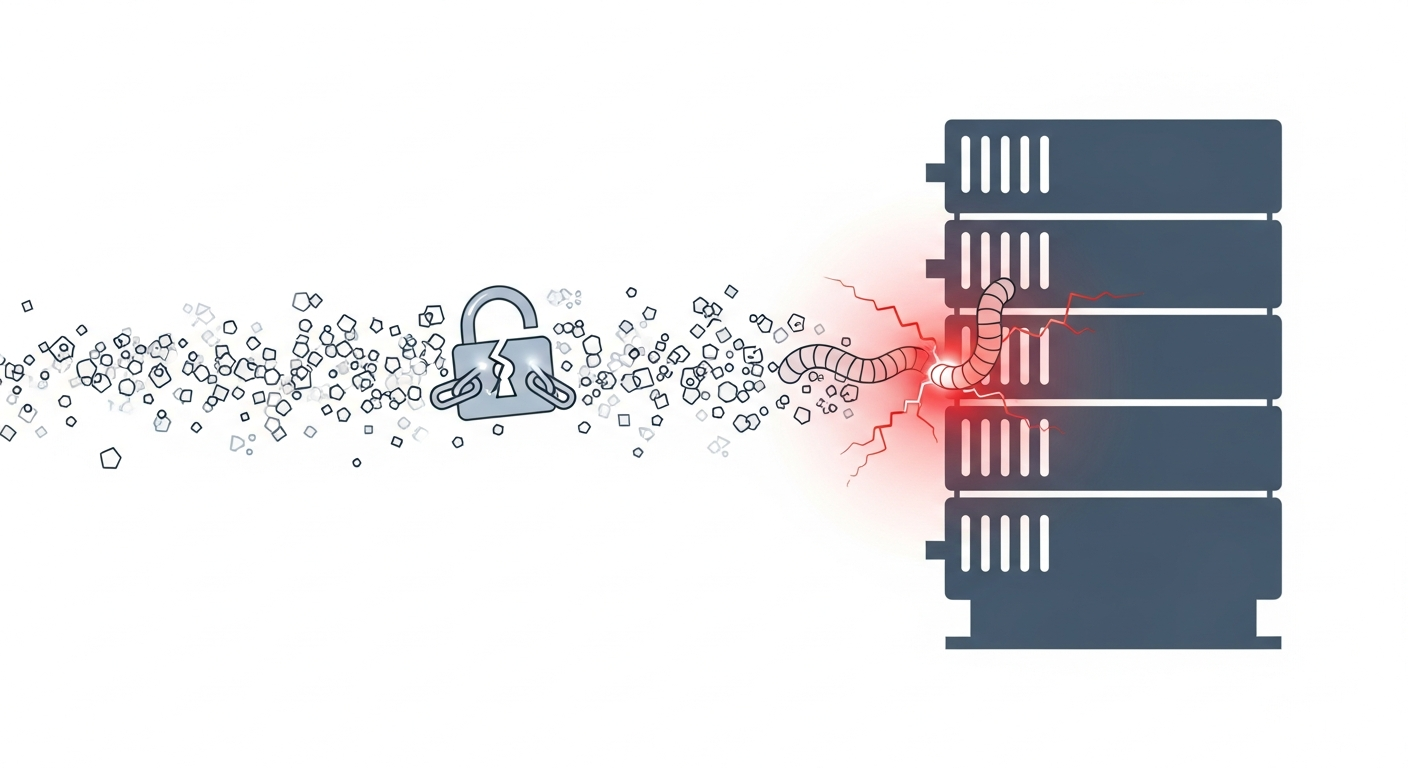
Insecure Deserialization: The Risk Hidden in Your Data Parsing
What insecure deserialization actually means
Insecure deserialization is what happens when an app turns untrusted bytes into live objects or behavior without enough checks. The problem is not parsing on its own. The problem starts when the parser is allowed to recreate structure that later drives authorization, routing, or method calls.
I usually treat this as a boundary mistake. Data comes in as text, base64, a cookie, a cache blob, or a queue message. Later, the code “rehydrates” it into something richer than plain data. If that reconstruction step accepts attacker-controlled structure, the app can be pushed into work it never meant to do.
Where parsing turns into execution
The bug usually shows up in one of two places:
- A deserializer accepts a format that can express behavior, not just data.
- The reconstructed object is later used in a way that triggers side effects.
That second part is easy to miss. A lot of teams look for obvious gadget chains and overlook the simpler problem: a parsed object can change control flow before anything exotic happens.
Common trust mistakes in session and cache data
I see the same pattern in session stores, worker queues, and cache entries:
- the client sends a blob that is assumed to be internal
- the server trusts a field like
role,price, orisAdmin - the object is rebuilt and used as if it came from a safe source
The impact is often plain but real: free accounts gain premium flags, cached permissions linger after revocation, or jobs run with fields the API never validates.
Why signed data is not the same as safe data
A signature only proves where the data came from. It does not prove the data is semantically safe.
If your code accepts a signed blob and then reconstructs a complex object, you still need to validate:
- the shape
- the allowed keys
- the value ranges
- the target class or prototype behavior
Signed garbage is still garbage. It just arrives with a checksum.
A JavaScript test case with unsafe object revival
Here is a minimal example of how object reconstruction can go wrong in JavaScript.
Reproducing the bug with a minimal parser
function reviveUser(serialized) {
  const obj = JSON.parse(serialized);

  // Unsafe: copying untrusted fields directly into a live object
  const user = {};
  Object.assign(user, obj);

  return user;
}

const payload = JSON.stringify({
  name: "alice",
  role: "admin"
});

const user = reviveUser(payload);
console.log(user.role);
This looks harmless, but the issue is not the JSON parser. The issue is that later code may treat user.role as trusted authorization state.
Now imagine the application uses that field to decide whether to show admin controls or call a privileged API route. The parser did not execute code, but it did let untrusted input become control data.
Showing the impact without using destructive payloads
A safe test is to look for privilege or behavior changes, not payload fireworks.
function canDeletePosts(user) {
  return user.role === "admin";
}

const testAccount = reviveUser(JSON.stringify({
  name: "guest",
  role: "admin"
}));

console.log(canDeletePosts(testAccount)); // true
That is enough to prove impact in many real applications. You do not need a destructive payload to show the flaw. If untrusted data can influence a privileged branch, the trust boundary is broken.
What to inspect in real applications
Transport boundaries and stored blobs
Start with places where data crosses trust boundaries:
- cookies
- local storage values sent back to the server
- signed session payloads
- queue messages
- cache entries
- webhook bodies
- object fields stored as serialized strings in a database
The key question is simple: “Who gets to decide the shape of this object?”
If the answer is “the client,” then the server should treat it as hostile input until validation is complete.
Server-side validation before reconstruction
A good pattern is to validate the raw input before you rebuild anything with behavior attached.
Look for:
- unexpected keys
- prototype-related keys
- type mismatches
- nested structures that should not exist
- fields that alter authorization state
If you see reconstruction before validation, that is a weak spot. The fix belongs on the server, not in the browser.
Defensive patterns that hold up
Prefer JSON over executable formats
Use plain JSON when you can. Avoid formats that carry code, class names, or automatic object instantiation unless you truly need them.
Safe parsing is not enough by itself, but it removes a lot of accidental power from the input.
Use schemas and allowlists before hydration
Validate against a schema before turning the payload into an application object. Allowlist the fields you expect and reject everything else.
A simple approach in JavaScript is to map only known keys:
function parseUser(input) {
  const raw = JSON.parse(input);

  return {
    name: typeof raw.name === "string" ? raw.name : null,
    email: typeof raw.email === "string" ? raw.email : null,
    role: raw.role === "member" ? "member" : "guest"
  };
}
That looks less flexible than a generic revive step. It is also much harder to abuse.
Treat untrusted input as data only
The safest rule is the boring one: input stays data until you have validated it.
Do not let deserialization decide:
- authorization
- object type
- method dispatch
- file paths
- job routing
- payment state
If the application needs richer behavior, build it after validation with server-owned logic.
Conclusion
Insecure deserialization is usually not a dramatic parser bug. It is a trust mistake that lets untrusted input become structured state the application relies on. That is why the impact often shows up as authorization bypass, tampered session data, or dangerous object hydration rather than obvious crashes.
When I test this class of issue, I look for where blobs are accepted, where they are rebuilt, and what the program does with the reconstructed object. If the boundary is weak there, the rest of the app usually follows.