Dirty Frag Shows Why “Local Only” Linux Bugs Still Matter to Web Teams
Why a local Linux bug is still a web problem
I keep seeing teams shrug off kernel bugs with the words “local only.” That label is too narrow. In web infrastructure, local access shows up all the time: after an SSH login, a web shell, a compromised app worker, a CI runner job, a shared hosting account, or a container breakout that is one step short of host control.
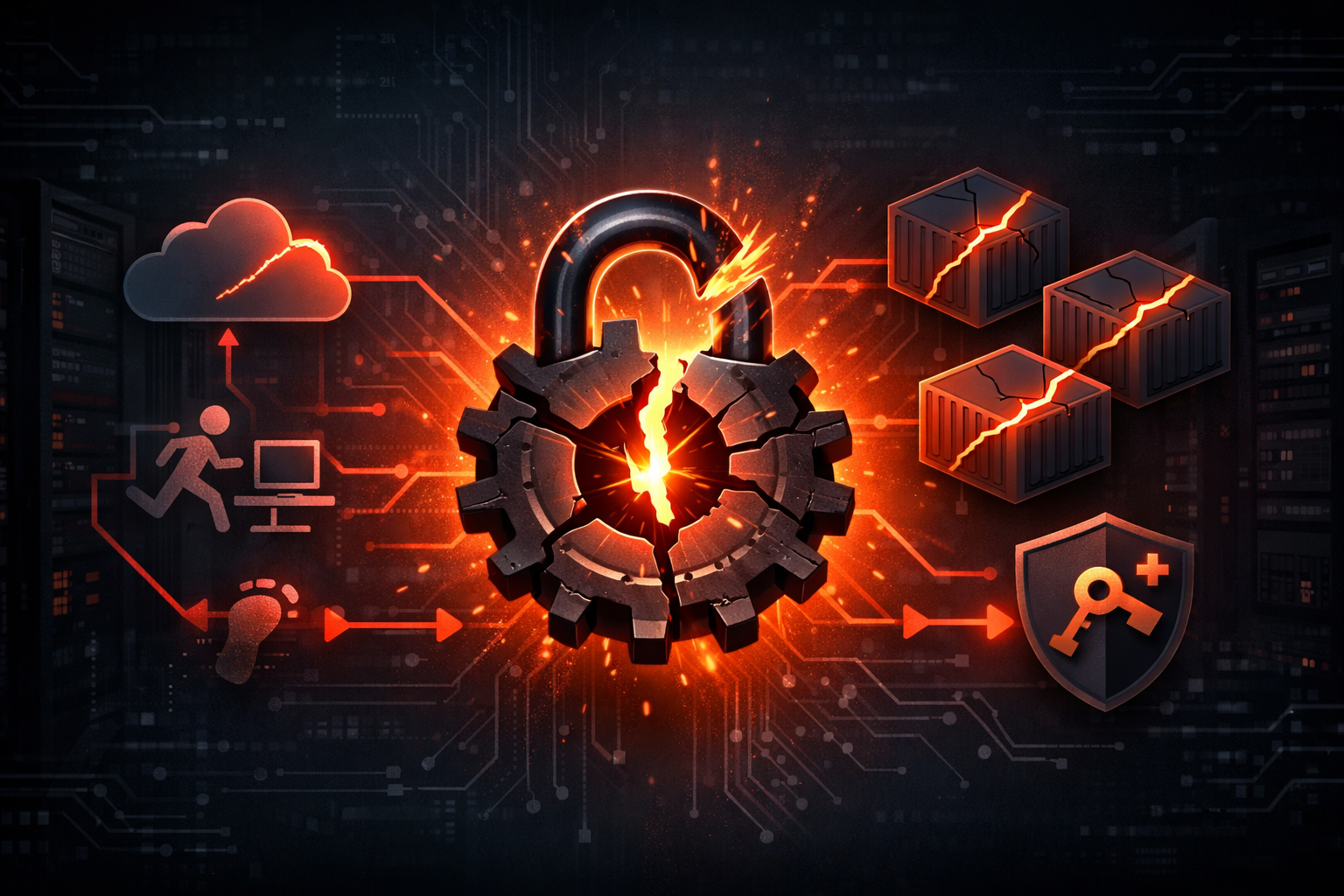
Dirty Frag matters because it turns that foothold into root on the Linux host. Once an attacker can do that, the incident is no longer just a bad app account. The whole machine is part of the response.
What Dirty Frag is at a high level
Dirty Frag is a newly disclosed Linux local privilege escalation chain. Public reporting links it to CVE-2026-43284 and CVE-2026-43500, and the chain has been described as affecting kernel networking and memory-fragment handling paths, including esp4, esp6, and rxrpc components.
The useful detail is not the naming. The useful detail is that an unprivileged local user can abuse a kernel bug to gain root on many major distributions. Microsoft, Qualys, NHS England Digital, and Linux security reporting all treated it as a real host-compromise issue, not a lab-only curiosity.
“Local” describes the entry condition, not the impact. If a web app, CI job, or container gives an attacker local execution, the kernel bug decides whether they stop there or take the box.
Why privilege escalation changes the whole incident
A lot of incidents start small. A leaked SSH key. A vulnerable upload handler. A stolen build token. A shell in a container. By itself, that may still be contained. A local privilege escalation changes the shape of the response.
Common entry points that make local bugs reachable
- web shells on exposed application servers
- compromised app runtimes running as
www-dataor another low-privilege account - CI/CD runners that execute untrusted build steps
- shared VPS or hosting environments with multiple tenants
- Kubernetes nodes or OpenShift worker nodes where an attacker gets limited execution
- jump boxes and admin hosts where “temporary” access is wider than people think
Where untrusted code usually lives
Web teams already run untrusted inputs through parsers, templates, plugins, image tools, package installers, test suites, and automation scripts. Any of those can become the first local foothold. Once that happens, a kernel LPE is no longer an adjacent issue. It is the next step in the chain.
How Dirty Frag fits the page-cache bug family
Dirty Frag belongs in the same mental bucket as Dirty Pipe and Copy Fail: bugs that abuse kernel memory handling in a way that breaks normal trust boundaries.
Dirty Pipe and Copy Fail are the useful comparison
Dirty Pipe showed how page-cache manipulation can become a powerful primitive. Copy Fail reinforced that a kernel bug does not need to look dramatic at the API layer to have serious consequences.
Dirty Frag is not the same flaw repeated, but the family resemblance matters. These attacks are dangerous because they target shared kernel mechanics, not a single application mistake.
Why page-cache corruption is such a bad primitive
The page cache is how Linux stores and reuses file-backed memory. If an attacker can corrupt or influence that path, they may be able to alter file contents or bypass assumptions that user space relies on. That is a bad primitive because it cuts across normal permission checks and can reshape the system underneath running software.
What root on the host actually exposes
Root is not just “more permissions.” On a real server, root usually means the attacker can see what the operator sees and more.
Secrets, tokens, and mounted data
- environment variables from app processes
- API keys and cloud tokens
- database credentials in config files
- mounted volumes from containers
- logs with sensitive request data or session material
Container boundaries and host reachability
If the host kernel is vulnerable, containers do not save you. Containers share the kernel. If an attacker reaches root on the node, they may be able to inspect other workloads, mounted secrets, runtime metadata, and orchestration state.
Persistence and lateral movement
Root also changes the post-exploitation story:
- persistence becomes easier
- tampering becomes harder to notice
- internal network access expands
- service credentials can be reused elsewhere
- attacker tooling can be hidden below the application layer
What defenders should check now
Kernel and vendor advisory review
Start with the boring part: verify kernel versions against your vendor advisories. Check whether your distro has shipped a fixed kernel and whether your fleet actually picked it up.
Modules, workload types, and local execution paths
Dirty Frag has been associated with esp4, esp6, and rxrpc paths, so review whether those modules or related workloads are present in your environment. Do not blacklist modules blindly; check whether you depend on IPsec, RxRPC, AFS-style workflows, or other functionality that would break.
Also review where local code execution exists:
- CI runners
- bastion hosts
- build workers
- developer jump boxes
- shared Linux servers
- exposed application nodes
Multi-tenant and CI/CD risk ranking
Prioritize systems where one compromise affects many tenants or many deployments:
| System type | Why it matters |
|---|---|
| CI/CD runner | executes untrusted code by design |
| shared VPS host | one user can threaten neighboring workloads |
| Kubernetes node | one node can expose many pods and secrets |
| application server | web shell to host compromise is a short path |
| developer jump box | credentials and internal access are concentrated |
Mitigation priorities that make sense
Patch strategy and vendor guidance
Patch the kernel as soon as your vendor provides a fixed build. Follow OS guidance first, not random internet advice. If you manage fleets, confirm the fix actually reached every image, node pool, and long-lived server.
Hardening when patching is delayed
If you cannot patch immediately:
- reduce untrusted code execution on the host
- run workloads as non-root where possible
- restrict local/admin access paths
- limit shell access to production boxes
- isolate CI runners and shared systems aggressively
- consider module blacklisting only if it does not break required services
Module blacklisting is not a universal fix. If you break required networking or RPC functionality, you may create a different outage while leaving the real exposure unaddressed.
Secret rotation after suspected compromise
If you think a host may have been compromised, rotate secrets as if root had access to the machine. That means cloud credentials, deployment tokens, SSH keys, database passwords, and any secret mounted into the host or its containers.
How I would triage Dirty Frag in a real environment
I would rank hosts by two things: whether they run a vulnerable kernel and whether they allow untrusted or semi-trusted local execution.
My first pass would be:
- internet-facing application servers
- CI/CD runners and build workers
- Kubernetes/OpenShift nodes
- shared multi-tenant systems
- developer access boxes and bastions
Then I would ask a harder question: if someone already had a low-privilege shell here, what would root expose? On many systems, the answer is enough to justify emergency patching.
Conclusion
Dirty Frag is a reminder that kernel bugs do not stay “local” for long in a web-heavy environment. If your platform runs apps, builds, containers, or shared workloads on Linux, a local privilege escalation is part of your attack surface.
Treat it like a host-level incident waiting to happen: patch fast, reduce local execution paths, review exposed modules and workloads, and rotate secrets if you have any reason to suspect compromise.
The app may have been the first foothold. The kernel bug is what decides whether the attacker stops there.